Showing posts with label Author. Show all posts

Yellowface by R.F. Kuang

16 Comments »

Occasionally, a book emerges that feels perfectly attuned to the current cultural landscape. R.F. Kuang's Yellowface is one such example. Since its release last year, it has garnered both critical acclaim and commercial success, quickly establishing itself as a must-read that encapsulates the spirit of the times. While it had been on my radar since its publication, I only recently had the opportunity to delve into its pages. In just a few days, I found myself completely absorbed by its narrative, understanding immediately why it resonated so deeply with readers.

June Hayward has always lived in the shadow of Athena Liu, her college classmate and literary rival. While Athena soared to success with one acclaimed novel after another, June's own writing career languished in obscurity. Their friendship, if it could be called that, was tinged with June's bitter envy of Athena's achievements.

One fateful evening at Athena's apartment in D.C., tragedy strikes when Athena suddenly chokes and dies. In shock and disbelief, June finds herself alone with Athena's latest manuscript—a groundbreaking work highlighting the forgotten contributions of Chinese laborers in World War I. Without a second thought, June decides to seize the opportunity fate has presented her. She takes the manuscript and a few other papers, imagining a future where she submits it to her publisher under her own name. After all, Athena no longer needs it, and June sees it as her chance to finally claim the success she believes she deserves. What could possibly go wrong?

Ironically, the central premise of Yellowface felt reminiscent of Jean Hanff Korelitz's The Plot, a book I had previously read. However, as I delved into R.F. Kuang's narrative, I quickly realized that she was using this familiar storyline to explore much deeper themes. Yellowface serves as a scathing commentary on tokenism in publishing, shining a spotlight on the industry's tendency to prioritize diversity for the sake of appearance rather than genuine inclusivity.

As June's deceit unfolds, she finds herself buoyed by an industry eager to blur her cultural identity for profit. Kuang skillfully interrogates the concept of ownership in storytelling, questioning who has the right to tell certain narratives and whose voices are amplified or silenced by the publishing world and social media. It's a thought-provoking examination of power dynamics and the consequences of chasing fame at any cost.

The novel is told from June's morally dubious perspective. She's not a traditionally likable character, and readers are keenly aware of the wrongness of her choices. Yet, there's an undeniable magnetism to her story that kept me engaged. While Yellowface may have echoes of familiar narratives, Kuang infuses it with profound insights that elevate it beyond mere familiarity. The result is a compelling and thought-provoking read that lingers in the mind long after the final page is turned.

For more information, visit the author's website, Amazon, and Goodreads

(2024, 39)

Knife by Salman Rushdie

14 Comments »

 "I’ll just say that we would not be who we are today without the calamities of our yesterdays."

The news of Salman Rushdie's brutal stabbing at a Chautauqua Institution literary event in August 2022 was both shocking and, in a sense, expected. Given the tumultuous history surrounding Rushdie's provocative 1988 novel, The Satanic Verses, and the subsequent fatwa issued against him by Iran’s Ayatollah Khomeini, it seemed almost inevitable that such an attack would occur. Rushdie had spent years living under constant police surveillance, largely withdrawing from public life until relatively recently, when the threat against him appeared to have diminished.

The vicious assault in 2022 served as a stark reminder that sentiments against Rushdie and his written words remained as violent as ever. Despite the mental and physical toll of the attack, Rushdie's response was characteristically defiant. Ironically, the event where the attack took place was a speaking engagement on the importance of safeguarding writers—a cruel twist of fate that underscored the ongoing threat against him. Rushdie confronted this violent attempt to silence him by doing what he does best: writing about it.

In Knife: Meditations After an Attempted Murder, Rushdie offers a candid reflection on the events leading up to the attack, his arduous path to recovery, and his perspective on the future. He recounts the 27 seconds of frenzied violence that forever altered his life, leaving him with catastrophic physical injuries and deep psychological scars. Buoyed by the support of his family and loved ones, Rushdie's resilience and unwavering spirit shine through. 

Knife transcends the narrative of mere survival; it delves into the complex emotions and philosophical reflections that arose from Rushdie's brush with death. Despite his staunch atheism, Rushdie grapples with the inexplicable miracle of his survival. It questions the very nature of existence and mortality. His imagined dialogue with his would-be assassin, whom he refers to as "A," offers a poignant exploration of human nature and the motivations behind such senseless acts of violence.

Ultimately, Knife is a testament to Rushdie's resilience and intellectual depth, offering readers a profound meditation on life, death, and the enduring power of the human spirit. Through wit, humor, and candid introspection, Rushdie navigates the complexities of his experience with grace and insight, crafting a narrative that is as thought-provoking as it is compelling.

For more information, visit the author's website, Amazon, and Goodreads

(2024, 38)


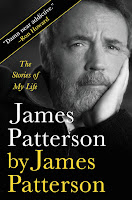
James Patterson by James Patterson

9 Comments »

When I think of authors who have helped sustain my weekly reading goal across the last decade, the first to come to mind is James Patterson. I was first introduced to his books when my Mom gave me her secondhand copy of Mary, Mary. From the very first page, I was hooked. As a typical high school student, I wasn't necessarily excited to read, but Patterson's book changed everything. This book was fun. I tore through his signature quick chapters, breathlessly needing to see what happened next. With the turn of the final page, I felt a sense of accomplishment at having read a book for pleasure and a yearning to read even more. 

Nearly 20 years later, I still get excited by Patterson's writing. I think it's safe to say that I'm also still excited about reading. One of the perks of reviewing as many books as I do has been the connections I've made with other readers and publishers. My bookstagram buddy Katie (@niftyreads) alerted me to Patterson's self-titled memoir and recommended I listen to the audio. The folks at Little Brown, Patterson's long-time publisher, provided me with a copy of the book, so I eagerly consumed the work by reading and listening. Given my history of reading Patterson's stories, it seems rather fitting that his memoir be book number 52 for the 10th year of A Book A Week. 

In James Patterson: The Stories of My Life, the bestselling author reflects on his life thus far through intimate stories that span the breadth of his storied career. While each chapter mostly follows the chronology of his life, Patterson maintains his signature quick pace by having each chapter serve as a short, conversational recollection. The topics are as varied as they are interesting. He writes about his days in advertising, his initial struggles to get published, and even sets the record straight about his controversial use of co-authors. I found his candor to be refreshing. Patterson narrates the audiobook, so listening to it really does feel like you're having a conversation with an old friend. James Patterson continues to hook readers with each new work, and this memoir is no exception. 

For more information visit the author's website, Amazon, and Goodreads

(2022, 52)


Trust No One by Paul Cleave

6 Comments »

Jerry Grey is a bestselling crime author. Writing under a pseudonym of Henry Cutter, his twelve novels have thrilled readers and granted a comfortable life to him and his family. Jerry is hard at work on his thirteenth book when he forgets his wife's name at a party. This seems like a simple slip of the mind, but soon he becomes more and more forgetful. Finally, he agrees to see a doctor who gives Jerry an unexpectedly grim diagnosis. At the young age of forty-nine, Jerry Grey has the early symptoms of Alzheimer's disease.

Fast forward a year and Jerry's descent into dementia has reached a dismal low. His wife Sandra has left him. His daughter rarely visits him and refuses to call him Dad. Abandoned by his family and barely able to remember his past, Jerry finds himself in the care of a nursing home. As his malady continues to ravage his mind, Jerry begins to confuse his own actions with those of the characters he used to write about. He used the Henry Cutter pseudonym as a way to separate the horrors he wrote about from the joys of his family life, but now the two are indistinguishable. Most days find Jerry confused and confessing to murders that took place in his novel.

Jerry has a habit of wandering from the facility in the night. When he is found, he is disoriented and has no recollection of how he escaped or what he did during the time he was gone. The situation becomes more dire when the police show up at Jerry's nursing home. It is no secret that Jerry has confessed to crimes from his novels, but now he has confessed to the murder of a girl who actually existed. Worse, her murder occurred on a night when Jerry escaped. Jerry is certain that he is not a killer, but he has no memory of the events of that night. With no alibi and a group of police seeking any closure to the case, Jerry struggles to defend his innocence and maintain his grasp on reality.

The novel switches back and forth between the past and present. The past is told through Jerry's "Madness Journal" that he started keeping at the start of his diagnosis. He knew that his memory would begin to fail, so he wrote the journal to inform his future self of his life. These journal entries alternate with the story of present day Jerry and his ongoing mental decline. As the novel progresses, The past and present begin to come together and culminate in a electrifying conclusion. The mystery ends up being conventional to the crime genre, but the spin of an unreliable protagonist helps to keep the plot moving and the suspense tightly wound. Trust No One is an adequately dark thriller that skillfully breathes new life into the genre while adhering to the style that readers have come to expect.

For more information, visit the author's website, Amazon, and GoodReads.

(2015, 19)


In Other Worlds: SF And The Human Imagination by Margaret Atwood

11 Comments »

These days, it seems like everyone is writing their memoirs. While I agree that some biographies are worth the read, many seem just plain unnecessary. Did the world honestly need the life stories of Flavor Flav? It is not that I don't enjoy reading the occasional autobiography (I recently read and reviewed one that I really enjoyed), but many times, these stories get bogged down in details that are unimportant to the story and boring to the average readers.

In her latest book, In Other Worlds: SF And The Human Imagination, acclaimed author Margaret Atwood has found a way to provide an insight into her beliefs, life, and writing process without following a typical "life story" format. Through personal stories and examples form her works and other influential novels, Atwood argues that there is a clear difference between works of Science Fiction, all of which must take place on some far away planet, and her "Speculative Fiction" novels, which are built upon the idea that everything "could" happen on Earth.

This is not a memoir. Instead, Atwood provides readers with small, essay style insights into her life. Because the book follows no real narrative structure, it can be very choppy at times. The ending section, in which the author provides short snapshots of stories, felt particularly tedious. I wouldn't recommend this book to all readers, but fans of the author, science fiction, and those looking for a history of the genre  should definitely check this out. It is by no means perfect, but it is a commendable attempt at redefining the way opinions and histories are presented to readers.

For more information, visit the author's
website http://margaretatwood.ca/,
the publisher's site, http://www.randomhouse.com/book/205858/in-other-worlds-by-margaret-atwood/9780385533966/,
and http://www.goodreads.com/book/show/10481151-in-other-worlds.

(week 5, book 5)

Powered by Blogger.